By Ethan Brooks
Updated November 2026
Wearing glasses and want headphones that won’t pinch your temples or push your frames out of place? The best bone conduction headphones for glasses leave the ear canal open and rest on the cheekbones or temples instead, which makes them a practical fit for most frame styles. This list compares six models based on listed features, manufacturer specifications, and patterns that owners commonly mention, including weight, sweat and water resistance, microphone quality, and how the band sits over the arms of eyeglasses.
Our top picks at a glance
- 1
 TOP CHOICEBest overallBone Conduction Waterproof Headphones, Bluetooth 6.0, 22g Lightweight Open Ear HeadphonesView on Amazon
- 2
 TOP CHOICEBest for sport and cyclingSHOKZ OpenRun Pro 2 Bone Conduction Bluetooth Sport HeadphonesView on Amazon
- 3
 TOP CHOICEBest for hybrid soundOtium Bone Conduction Headphones, 2026 Hybrid Stereo Open Ear HeadphonesView on Amazon
- 4
 Best for work callsSHOKZ OpenComm2 Open-Ear Bluetooth Headset, Noise-Canceling MicView on Amazon
- 5
 Best for budget-minded runnersRaycon Bone Conduction Headphones, Open Ear Running HeadphonesView on Amazon
- 6
 Best for lightweight daily useBone Conduction Headphones with LED Power Display, Bluetooth 6.0 Open-EarView on Amazon
Our Top Picks
Quick Comparison
| Product | Best for | Key feature |
|---|---|---|
| Bone Conduction Waterproof Headphones | Overall fit with glasses | 22g open-ear design |
| SHOKZ OpenRun Pro 2 | Sport and cycling | IP55 rating, 12-hour battery |
| Otium Bone Conduction Headphones | Hybrid sound | Bone and air drivers |
| SHOKZ OpenComm2 | Work calls | Noise-canceling mic, mute button |
| Raycon Bone Conduction Headphones | Runners | Sweat and water resistance |
| Bone Conduction Headphones with LED Power Display | Lightweight daily use | LED battery display, IPX5 |
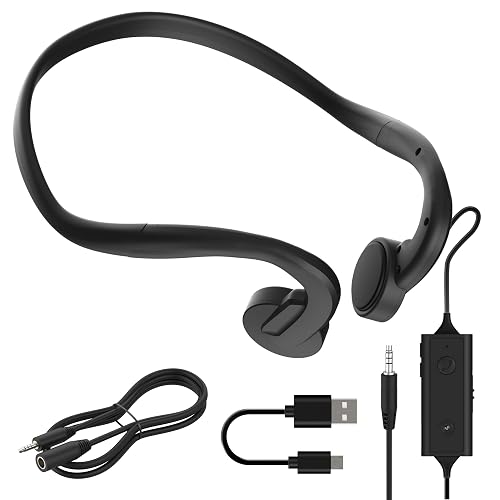
Bone Conduction Waterproof Headphones, Bluetooth 6.0, 22g Lightweight Open Ear Headphones
Bone Conduction Waterproof Headphones , Bluetooth 6.0, 22g Lightweight Open Ear Headphones with Noise-Reducing Mic, Clear Balanced Audio, 10H Playtime, Water-Resistant for Running, Cycling & Workouts For a deeper look, Best Open-Ear Headphones for All-Day Comfort: 6 Compared covers this in detail.
Best for: Overall fit with glasses
This model suits people who want the lightest option on the list and plan to wear frames all day. Its 22-gram body is among the lighter weights in this group.
Pros:
- Light enough for long wear over eyeglass arms
- Listed 10-hour playtime
Cons:
- Bass response is modest compared with sealed earbuds
SHOKZ OpenRun Pro 2 Bone Conduction Bluetooth Sport Headphones
SHOKZBundle with Reflective Strip;DualPitch premium sound;Open ear awareness; Smart Mic; IP55; 12H battery; Running/Cycling/Hiking OpenRun Pro 2 Bone Conduction Bluetooth Sport Headphones, Black
Best for: Sport and cycling
Runners and cyclists who wear sunglasses or prescription frames during outdoor training will find this model built for sweat and weather. Its band is designed to stay put during movement.
Pros:
- IP55 rating for dust and water resistance
- Listed 12-hour battery life
Cons:
- Heavier than the lightest models in this list
Otium Bone Conduction Headphones, 2026 Hybrid Stereo Open Ear Headphones
Hybrid Bone & Air Drivers Open Ear Earbuds, Bluetooth 6.0, AI Music App, 12H Playtime, IPX6 Waterproof, Running Headphones Otium Bone Conduction Headphones, 2026 Hybrid Stereo Open Ear Headphones
Best for: Hybrid sound
Listeners who want more low-end presence than pure bone conduction usually offers may prefer this hybrid design. It combines bone and air drivers in one open-ear unit.
Pros:
- Hybrid drivers add fuller bass
- IPX6 water resistance listed
Cons:
- Companion app features vary by owner experience
SHOKZ OpenComm2 Open-Ear Bluetooth Headset, Noise-Canceling Mic
Bone Conduction Headphones;Mute Button for Work Calls and Meetings; PC and Mac Compatible;16-Hour Battery Life & Quick Charge SHOKZ OpenComm2 Open-Ear Bluetooth Headset, Noise-Canceling Mic
Best for: Work calls
Office workers who take frequent calls while wearing glasses will appreciate the boom-style mic and mute button. It is aimed at desk and meeting use rather than workouts.
Pros:
- Mute button for quick call control
- Listed 16-hour battery life
Cons:
- Less suited to running than sport-focused models
Raycon Bone Conduction Headphones, Open Ear Running Headphones
Raycon Bone Conduction Headphones – Open Ear Running Headphones & Bluetooth Earbuds, Sweat & Water-Resistant with Mic (Gray)
Best for: Budget-minded runners
Runners looking for a capable open-ear option without a premium price tag may find this model a practical match. It is sweat and water resistant with a built-in mic.
Pros:
- Sweat and water resistant for runs
- Built-in mic for calls on the move
Cons:
- Fit may require adjustment with thicker frames
Bone Conduction Headphones with LED Power Display, Bluetooth 6.0 Open-Ear
Bone Conduction Headphones, Bluetooth 6.0 Open-Ear Headphones with LED Power Display, 12-Hour Playtime Earbuds with Mic, IPX5 Waterproof Earphones Ultra-Light for Running, Cycling, Walking Black
Best for: Lightweight daily use
Anyone who wants an easy-to-check battery level and a comfortable everyday fit will find this model useful. It is a good choice for walking and commuting.
Pros:
- LED power display shows remaining charge
- IPX5 rating for splashes and sweat
Cons:
- Lower water rating than full waterproof models
Buying Guide
Frame compatibility
Bone conduction headphones rest on the temples or cheekbones, so the band has to clear your eyeglass arms. Thin metal frames and wide plastic arms can behave differently, so check how the band sits before committing.
FAQ
Do bone conduction headphones work with glasses?
Yes, most bone conduction models are designed to sit on the cheekbones or temples rather than inside the ear, so they generally fit comfortably alongside eyeglass arms. Fit can vary with frame thickness and head shape, so it is worth checking how the band sits with your specific frames.
Will bone conduction headphones press against my temples?
Pressure depends on the band tension and the design of the transducer pads. Many owners find that a snug but not tight fit keeps the headphones stable without causing discomfort over long sessions.
Are bone conduction headphones good for running and cycling?
They are a popular choice for outdoor activity because the open ear design lets you hear traffic, people, and your surroundings. Water and sweat resistance ratings vary by model, so check the listed IP rating if you train in rain or heavy sweat.
Can I take calls with bone conduction headphones?
Many models include a built-in microphone for calls, and some add noise reduction to help your voice come through in windy or noisy places. Call quality differs across models, so look for the microphone features that matter most to you.
How long do bone conduction headphones last on a charge?
Battery life is listed by each manufacturer and can vary with volume level and how you use features like calls or voice prompts. Real-world playtime may be shorter than the stated figure, especially at higher volumes.
Are bone conduction headphones safe for hearing?
Because they leave the ear canal open, they do not seal sound inside your ear, which many users find easier on the ears at moderate volumes. As with any headphones, keeping the volume at a reasonable level is the best way to protect your hearing.
Conclusion
If you want an all-around pick that handles daily listening, running, and workouts without fuss, a lightweight model with solid water resistance and a long battery is a strong starting point. Athletes who ride or train hard may prefer a sport-focused option with a secure fit and higher sweat protection.
For frequent calls or office use, choose a model with a clear noise-reducing microphone and a mute function, while those on a tighter budget can look at the more basic options that still deliver the open ear comfort that makes bone conduction appealing with glasses.
Related reading
- Best Bone Conduction Headphones to Wear with Glasses: A Practical Guide (2026)
- 5 Best Bone Conduction Headphones That Works with Glasses (2026)
- Wireless Bone Conduction Headphones Aftershokz: 5 Best Picks Compared (2026)
- Wirecutter Bone Conduction Headphones: 6 Best Wired Picks Compared
About Ethan Brooks
Ethan Brooks is part of our editorial team and reviews and edits our headphone tech & types guides, checking product details against manufacturer specifications and owner feedback.